2025
Teamwork: Alahe Akhavan, Diana Bolaños, Mako Miyatake, Nimran Shegill, Semina Yi, Tianyu Yu, Mingjie Zheng (Alphabetical order)
Advisor: Ala Moradian
In the clothing industry, fast fashion and related practices contribute to enormous amounts of waste in landfills and a lack of garment recycling. A majority of textile waste is not recycled, and recyclable textiles can take over two centuries to decompose in landfills. Therefore, changes in the clothing industry and consumer culture are required to address this global waste problem. Individuals who experience dynamic size changes over their lifetime, such as pregnant women, growing children, and individuals with notable weight changes, require new garments to accommodate the changes in body size and geometry.
One solution is to create a garment adaptable to these body changes. We present TransForma, a transformable textile that uses smocking patterns to expand over 200% for programmable local and global adaptability to body geometry with tunable structural stability and breathability. We focus on an application for maternity wear below, but this product may be applied to a range of applications including children’s apparel, fitness wear, pets’ clothing, camping gear, and fashion accessories.
Contributions:
- Concept design, development of the design and simulation tool, prototyping
Background: Garment Recycling
The fashion industry faces significant sustainability challenges, with approximately 100 billion garments produced annually, only 12% of textile waste recycled, and some textiles taking over 200 years to decompose in landfills. Meanwhile, conventional garments are designed with fixed sizes, making them unable to accommodate changes in body geometry over time. This creates a growing need for adaptable, long-lasting textiles that reduce frequent garment replacement and textile waste.
Potential users include pregnant women, growing children, and individuals experiencing weight fluctuations, who require clothing that dynamically adjusts to their changing bodies. Beyond apparel, adaptable textiles also offer opportunities in pet clothing, camping gear, and fashion accessories, where flexible sizing and space-saving designs are desirable.
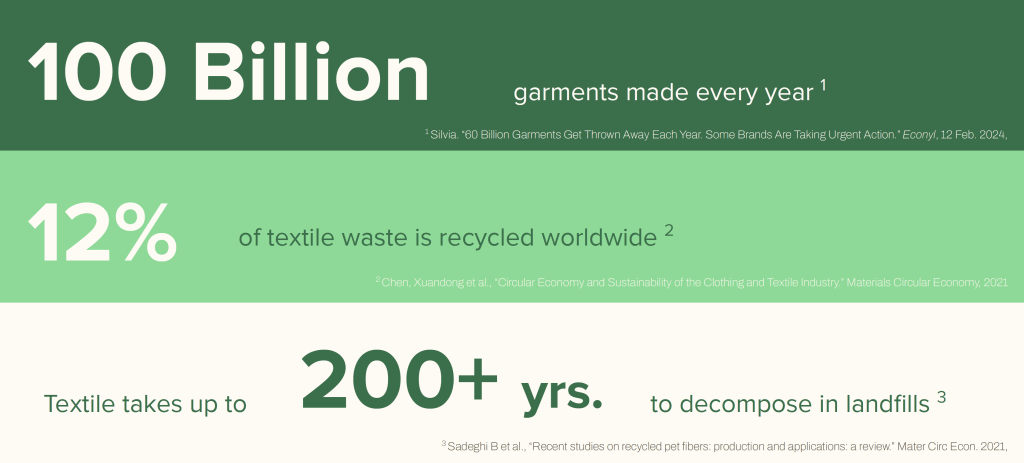
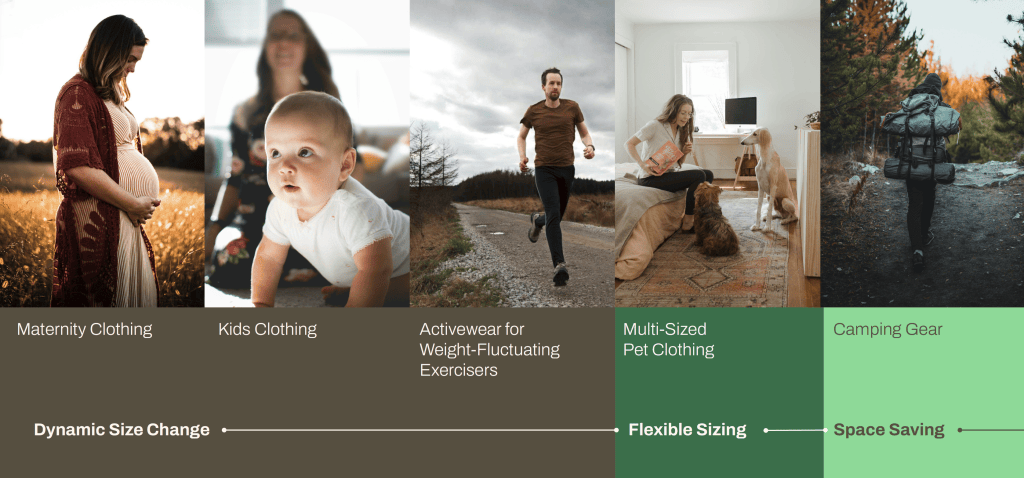
Garment recycling challenges and potential users and markets (Figures by group members)
Existing approaches to adaptable clothing and textiles generally fall into three categories. Traditional adjustable garments use mechanisms such as elastic fabrics, straps, and adjustable fasteners to accommodate size changes. While affordable and commercially accessible, these solutions are often limited to specific applications and offer restricted adaptability. Commercially available transformable garments provide more sophisticated adaptability but are often positioned as luxury products, with high costs and limited accessibility. Meanwhile, emerging HCI research explores innovative shape-changing textiles and programmable structures, demonstrating new possibilities for dynamic transformation, but many remain at the prototype stage without widespread market adoption.
These approaches reveal a key gap between affordability, adaptability, and innovation. TransForma aims to bridge this gap by introducing a scalable, low-cost transformable textile based on programmable smocking patterns.
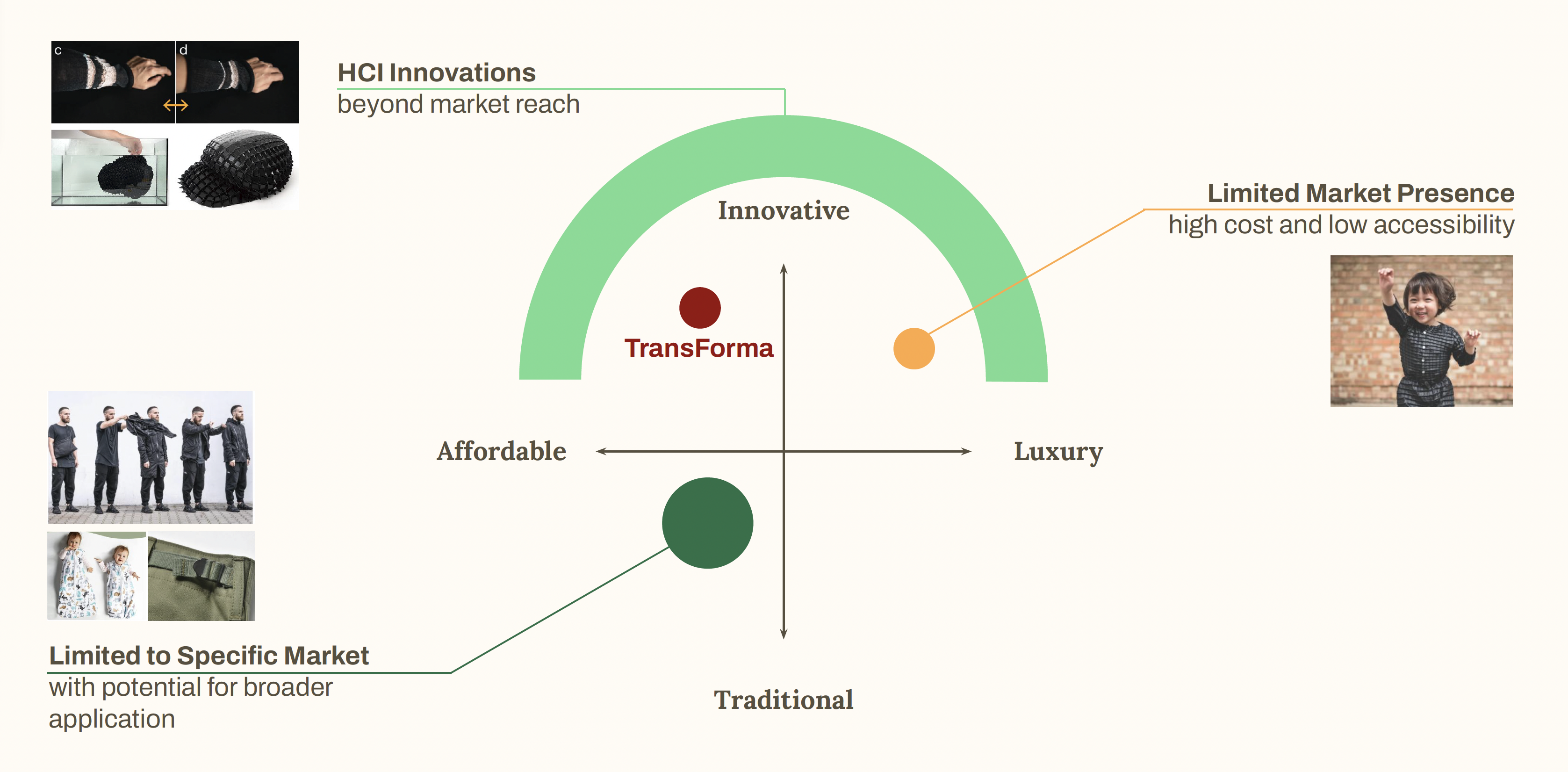
Related works from commercial products to research (Figures by group members)
Smocking Pattern
Smocking is a traditional textile technique that creates three-dimensional patterns by stitching and gathering fabric at predefined points. These geometric patterns enable fabric to expand and contract through controlled folding and unfolding. By programming the stitching patterns, smocking can achieve customizable deformation, directional expandability, and tunable structural properties, offering a promising approach to creating adaptable and transformable textiles.
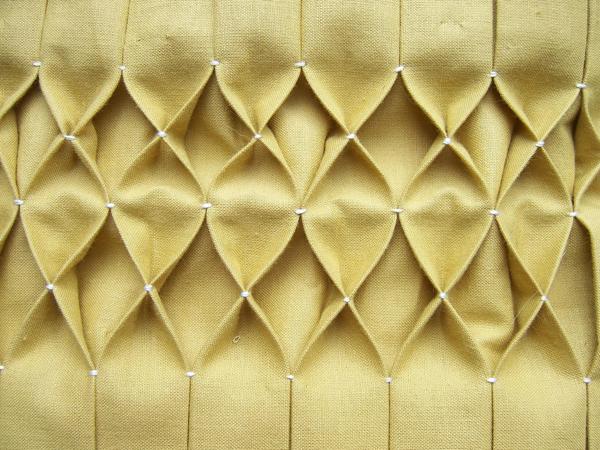

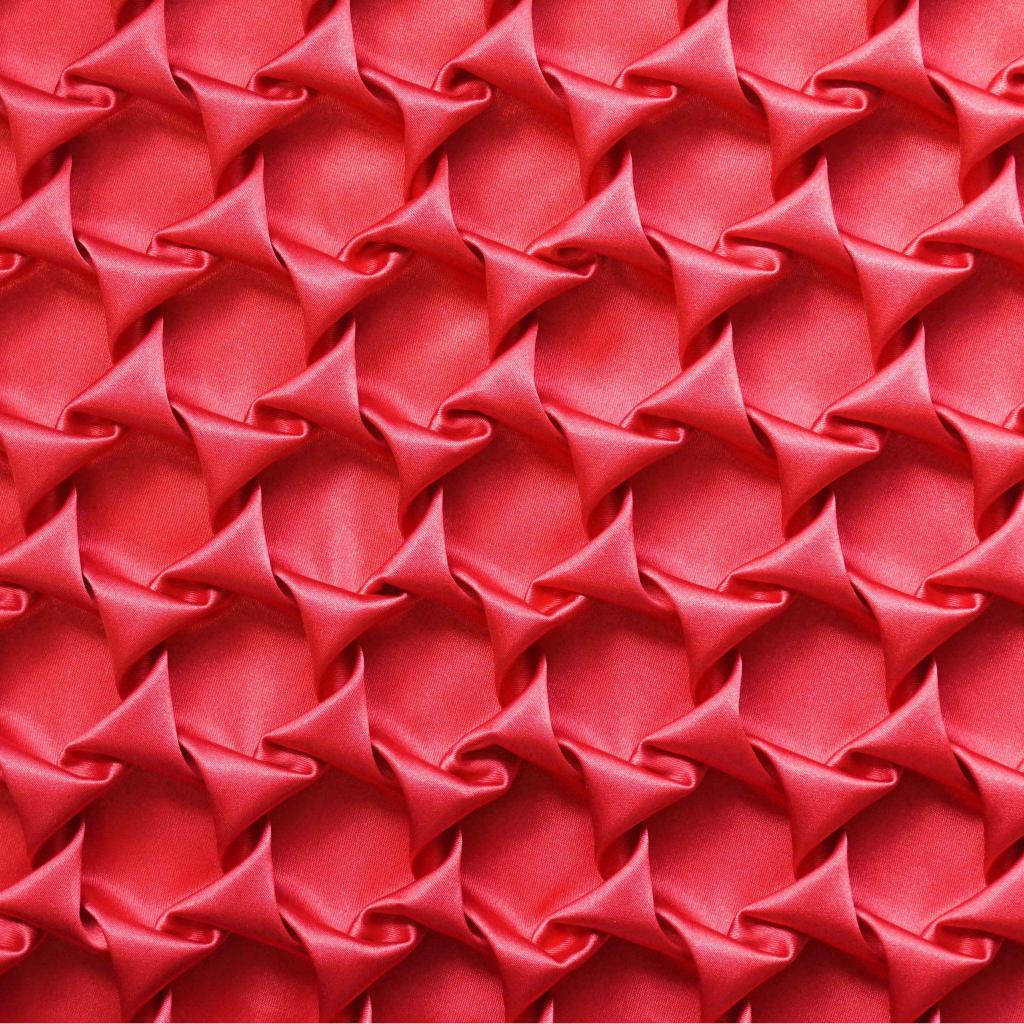
Smocking patterns in fabric design (Images from Internet)
Design and Simulation Tool
To help users design and explore customized smocking patterns, we developed a computational design and simulation tool based on Rhino Grasshopper. The tool enables users to customize fabric geometry, material softness, and stitching patterns. The tool automatically simulates the tightening of stitches and the resulting fabric folding process, transforming flat textiles into three-dimensional smocking structures. Users can also apply external forces to the simulated fabric to explore its stretching and folding behaviors, enabling interactive evaluation and optimization of different smocking designs.
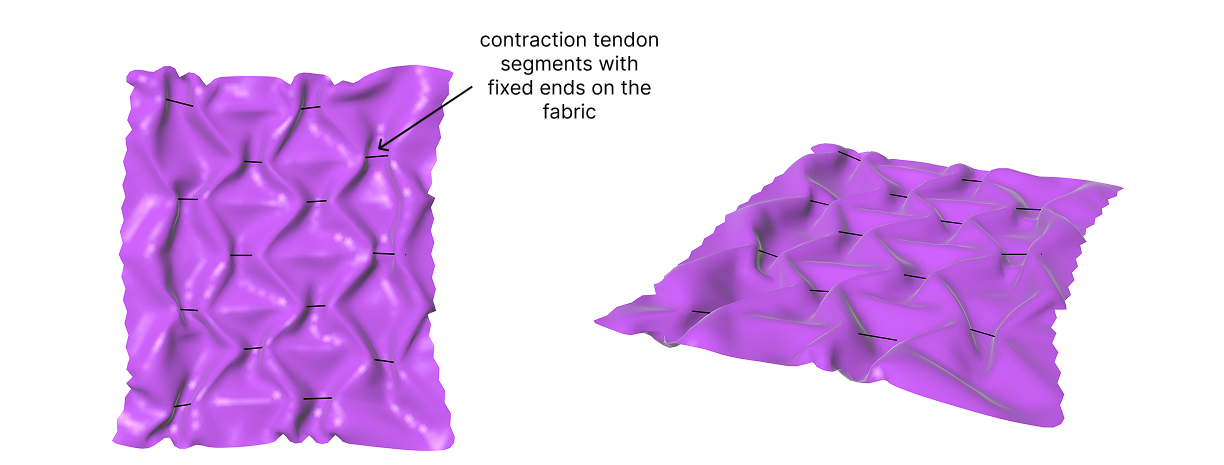
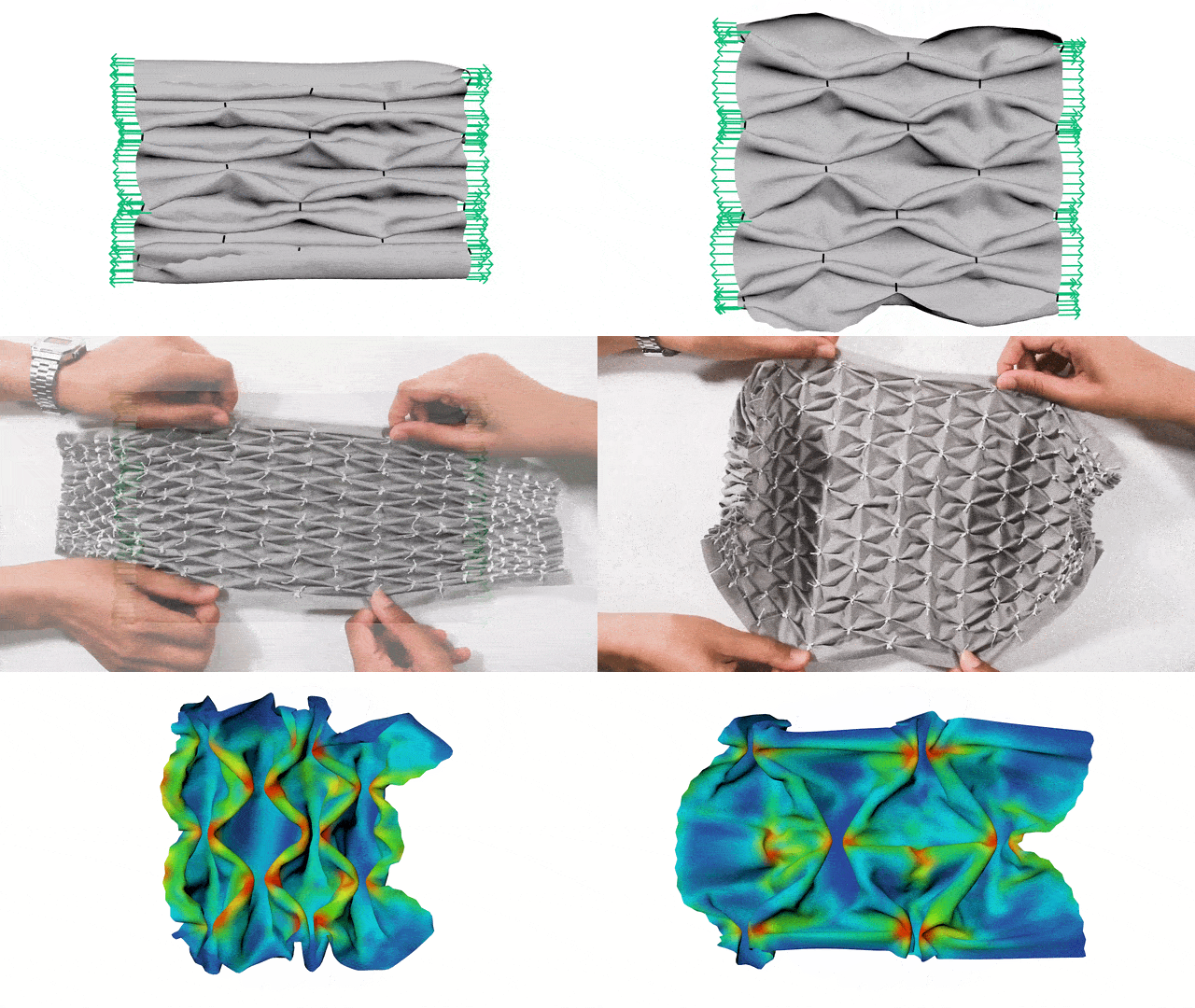
Simulation of the folding and unfolding behavior of the smocking pattern
Previous research indicates that by varying the ratio of the length of the stitching segments and the row distance, the fabric may exhibit different stability or elasticity through tunable buckling behaviors. We aimed to use simulation to validate and understand this behavior. We input two stitching patterns into the simulation program with different spacing ratios (a/c), and then simulated the shape-changing behavior when the fabric is stretched and then released. We used a customized code in Grasshopper to visualize the in-plane strain of the fabric mesh. From the results, we observed that when the smocking patterns have a relatively larger row distance, the buckling behavior is more likely to happen, which partially relieves the strain of the fabric and makes the smocking pattern more likely to stabilize both during and after the stretching state.
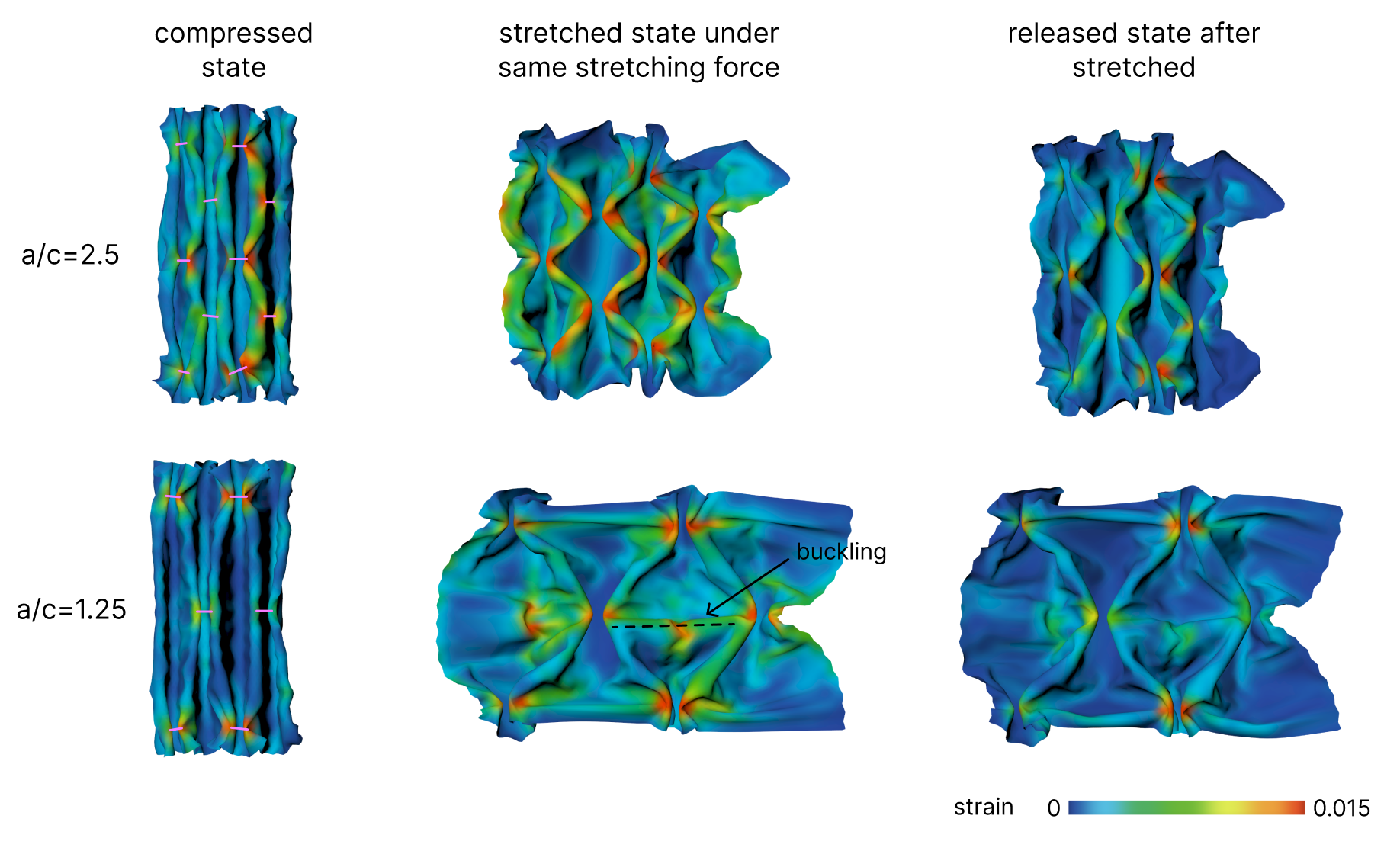
Strain and buckling behavior simulation
Users can also experiment with different stitching patterns and material softness to explore a variety of smocking effects, allowing them to evaluate and refine their designs before physical fabrication.
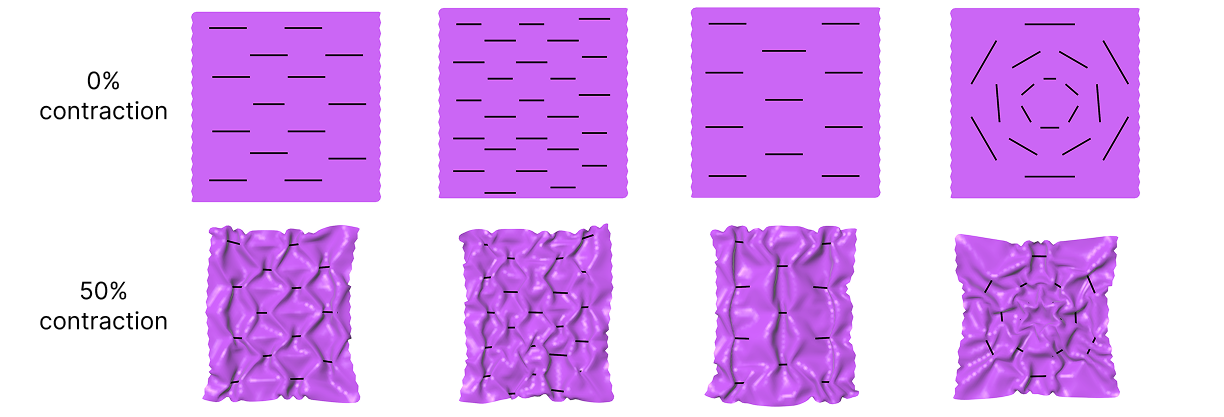
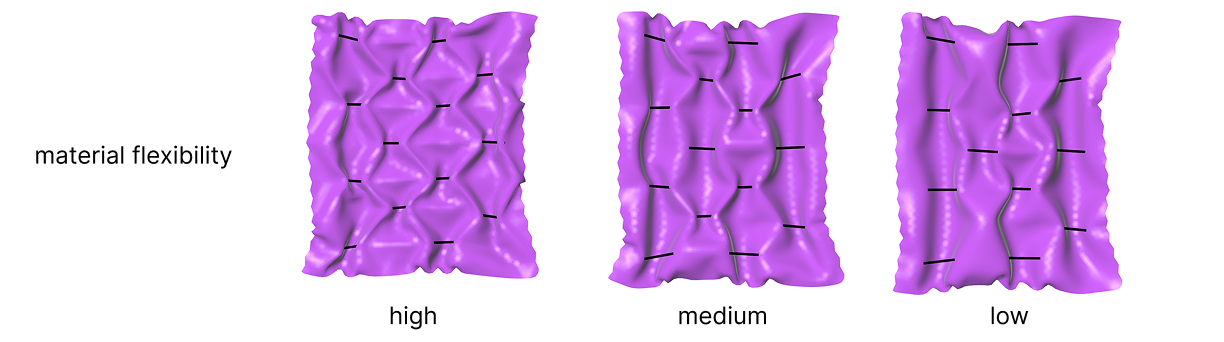
Design variations of stitching patterns and material flexibility
Application and Prototypes
Transformable dress for pregnant women
To demonstrate our technique, we showcased a Transforma dress for pregnant women. We designed and fabricated the front part around the belly area and combined it with a commercial dress.
We surveyed the dimensions of commercial maternity bottoms and found that the abdominal circumference for women wearing size M changes from 76 cm to 111 cm during pregnancy. Based on these numbers, we used our simulation and designed a customized smocking pattern with different local stretchability. The top and bottom sections were designed to be elastic (a/c=2) to fit closely to the body, while the middle section (a/c=0.67) was made more stretchable to allow the most significant shape change. To connect these two areas smoothly, we added an intermediate neutral pattern (a/c=1).
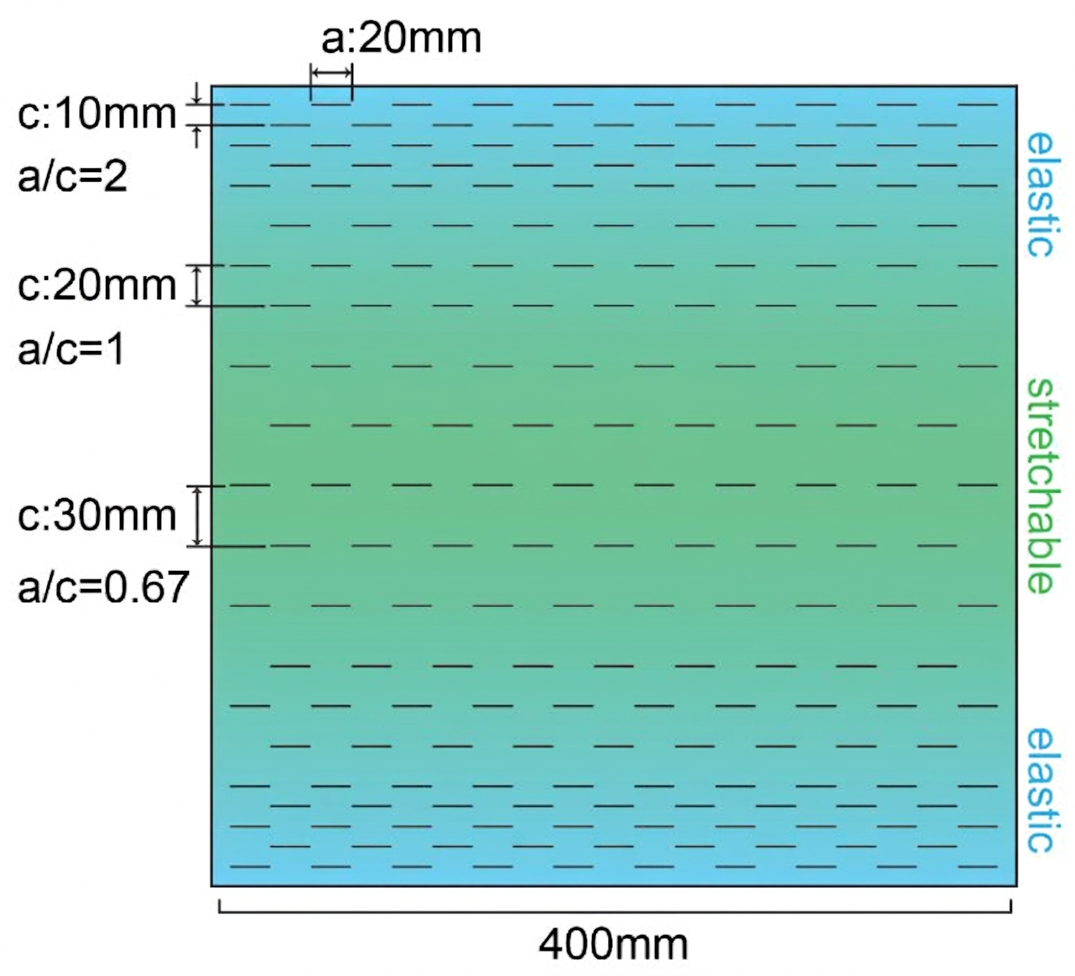
Design and prototype with Transforma fabric with different local stretchability (Collaborated with group members)
We attached the completed fabric to the commercial dress and measured the resulting shape change. The top and bottom parts stretched from 34 cm to 50 cm, and the middle part stretched from 34 cm to 67 cm, which satisfied the expected size change from our survey.
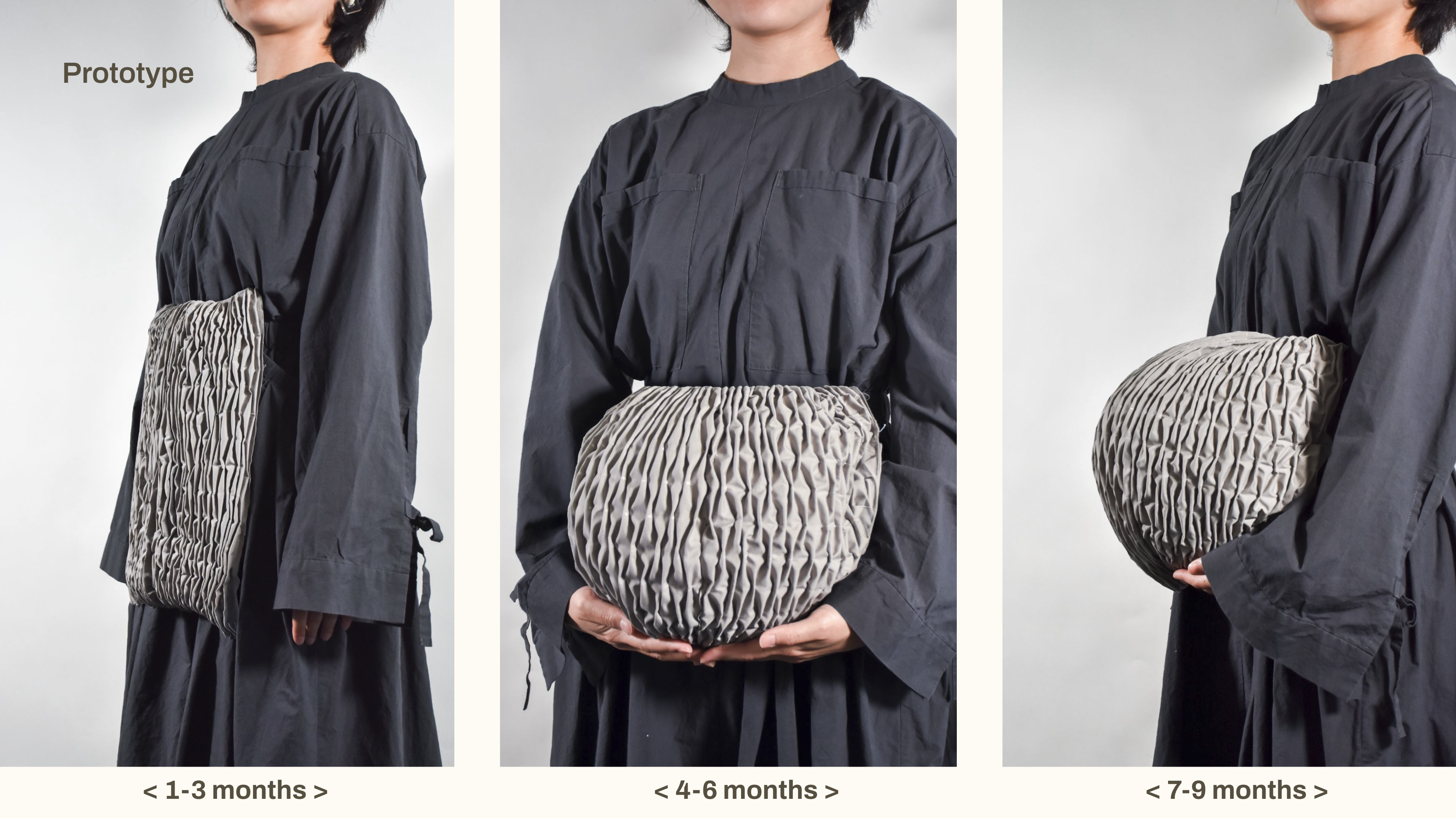
Demonstration of transformable dress for pregnant women (Model and Photograph by group members)
Extended design cases
We further showed a few concept designs of Transforma fabric, such as an expandable wrist sleeve for athletes to comfort injuries, or an adjustable neckpiece for business people to adapt to different social climates.
Athletes who use wrist and arm bands, such as tennis players and basketball players, might find use in this application during injury to the limb. Transforma can adapt to swollen shapes, and therefore allow for added compression, expansion, and breathability. For the neckpiece, the aesthetics of the garment can transform as a result of the multiple stability states offered by Transforma. Business clothing can adapt to different social contexts, ranging from formal to expressive. The versatility in form and function of Transforma presents an array of opportunities for future design case implementation.
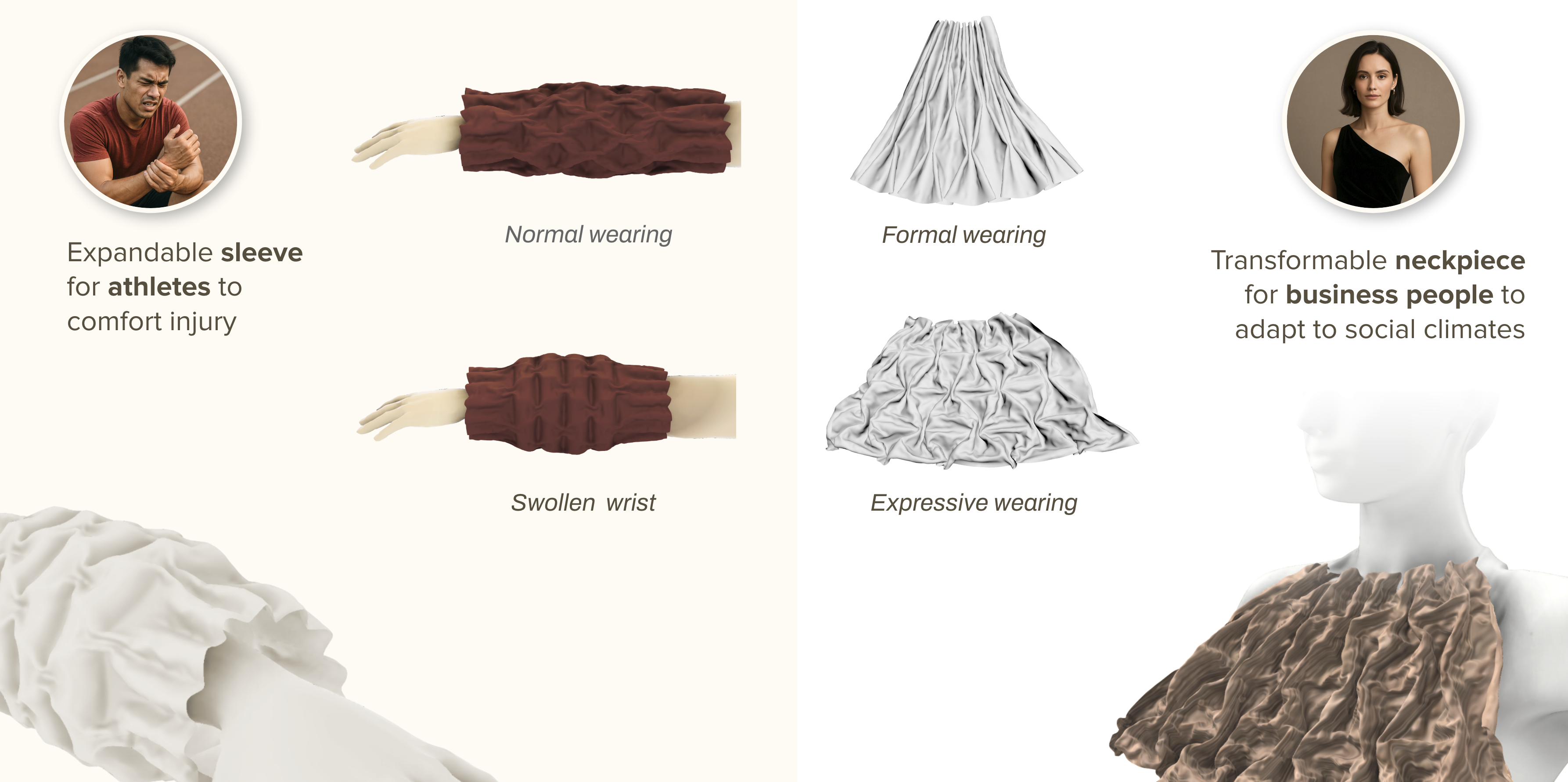
Extended design cases with Transforma (Collaborated with group members)

